

Services
With so many years in the field we can offer a variety of Fiber Optic services to suit your needs.
Splicing
Ribbon Fiber Fusion
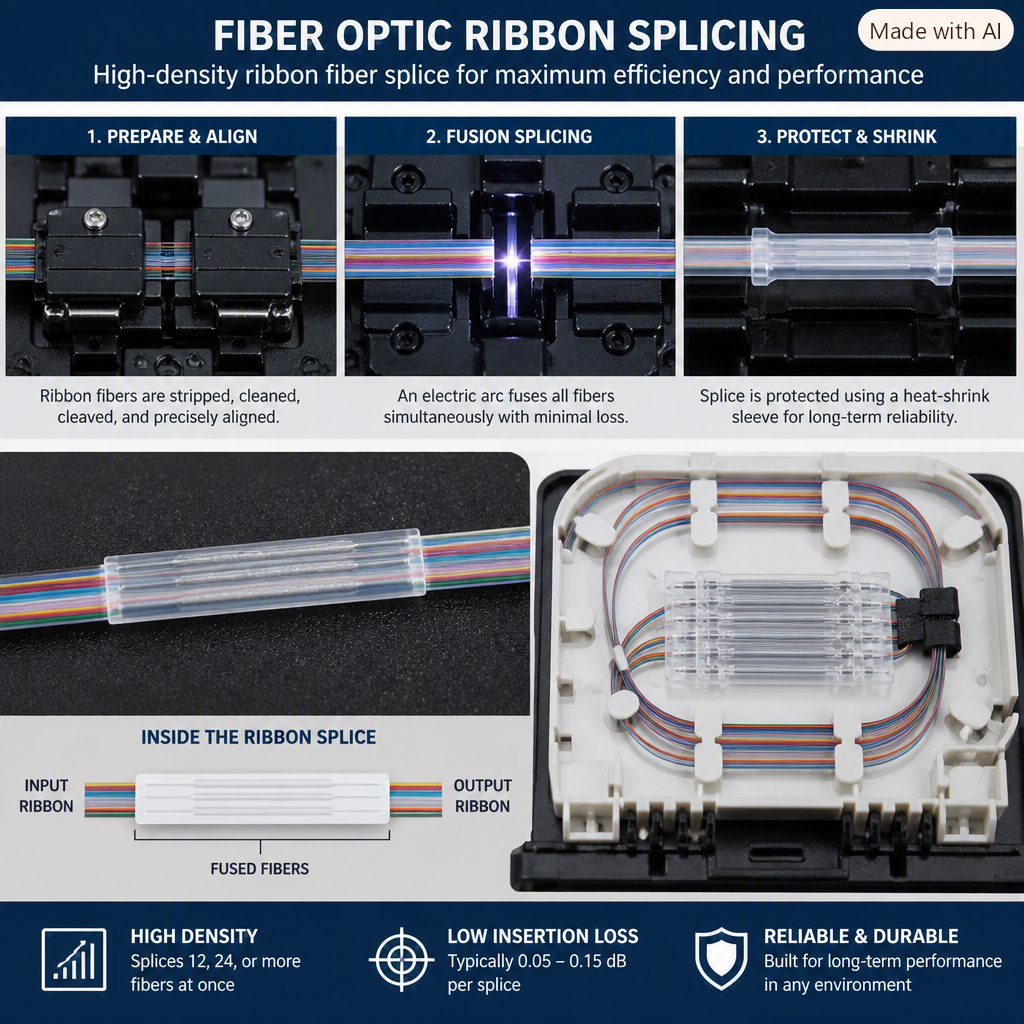
Ribbon fiber fusion is a method of splicing multiple optical fibers at the same time. Instead of having individual loose fibers, ribbon fiber consists of multiple fibers—commonly 12 fibers—arranged side-by-side and bonded together into a flat ribbon.
Why use ribbon fusion?
The big advantage is speed.
With conventional single-fiber splicing, a technician typically splices one fiber at a time. With a 12-fiber ribbon, a ribbon splicer can splice 12 fibers simultaneously.
So if you're splicing a large cable:
Single fiber: 144 fibers = 144 individual splice operations
12-fiber ribbon: 144 fibers = 12 ribbon splice operations
This makes ribbon fusion especially useful for high-fiber-count telecommunications networks, data centers, backbone networks, and large outside-plant deployments.
One important distinction: ribbon fusion isn't a different type of glass or fiber—it's primarily a different way of organizing and splicing multiple fibers together.
Single Fiber Fusion
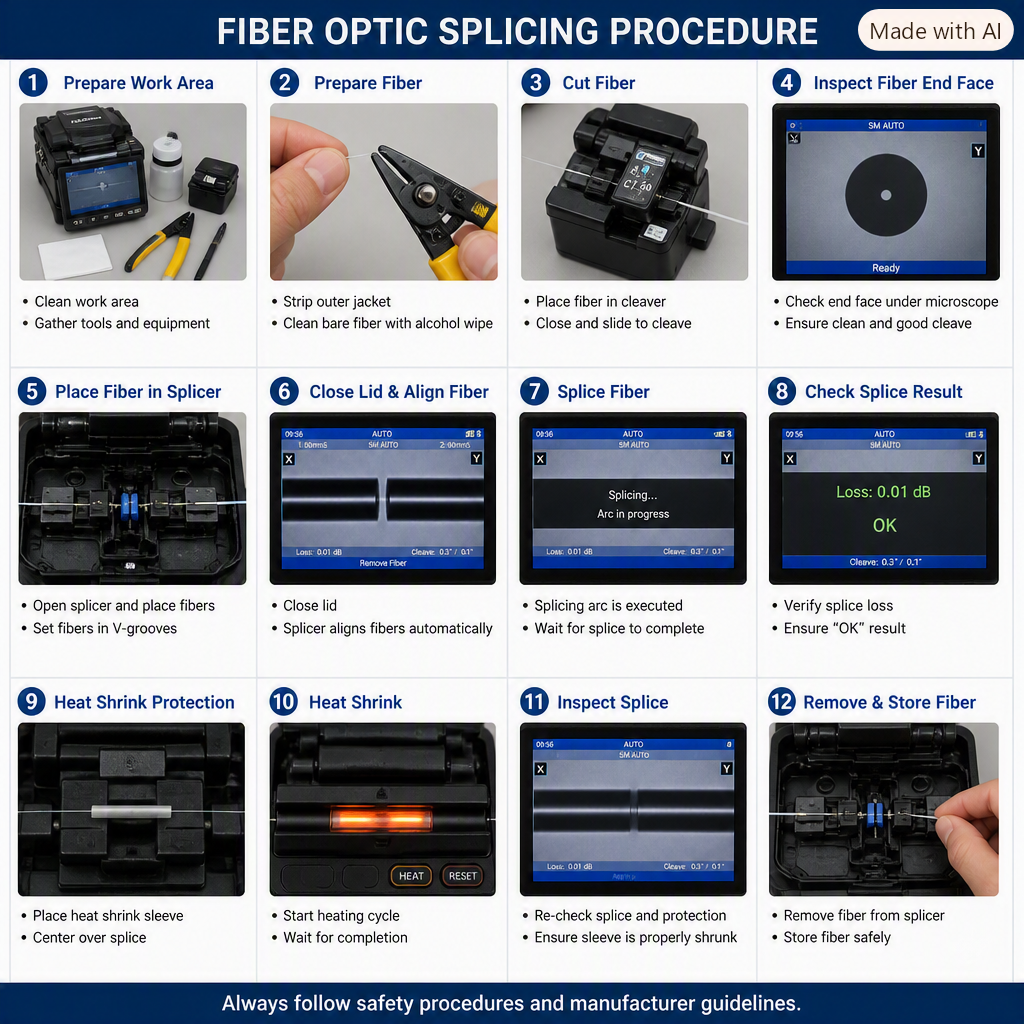
Single-fiber fusion splicing is the process of joining two individual optical fibers together, one fiber at a time, using a fusion splicer.
Why use single-fiber fusion?
The main advantage is precision and flexibility. Each fiber is individually aligned and spliced, making it ideal when you need to repair, extend, or connect specific fibers.
For example, with a 144-fiber cable, you can splice only the fibers you need rather than processing the entire cable as a ribbon.
Single-fiber fusion = one fiber at a time.
Ribbon fusion = multiple fibers simultaneously.
Single-fiber fusion is commonly used in FTTH, telecom networks, fiber repairs, drops, distribution cables, and installations where fibers aren't organized into ribbons.